
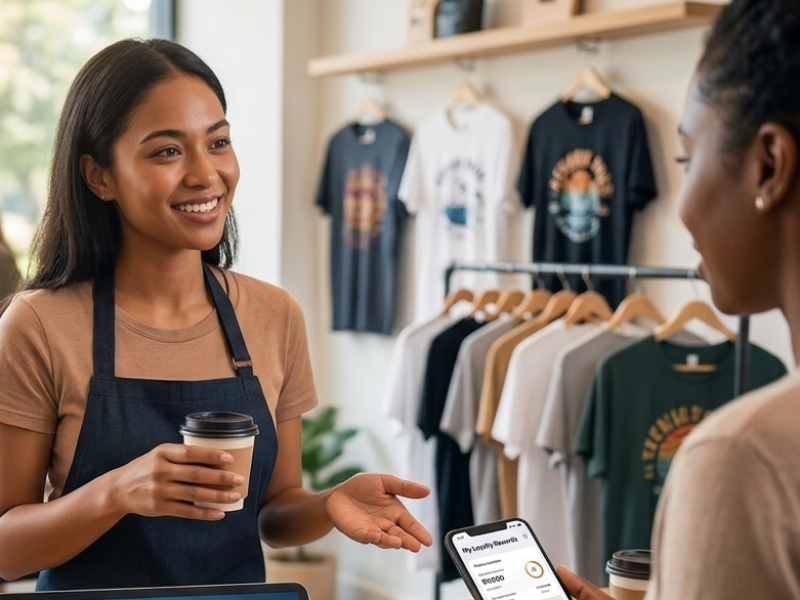
Loyalty programs are not new. For years, small merchants and large retailers have offered a free dessert for their best customers or VIP access to limited merchandise — instinctively knowing the strategic value in offering rewards to foster loyalty.
But as businesses grow, it’s not as easy to know who your best customers are, how to reward them in proportion to the value they bring, or how to build personalized relationships with them that will turn them into advocates. That’s where the right customer loyalty program can help you.
Notice the qualifier “right”.
Because loyalty programs are not new, the average American household has at least 18 loyalty program memberships. But only 33 percent of loyalty customers feel that those programs are addressing their needs.
In this guide, we will cover the effectiveness (and ineffectiveness) of loyalty programs in the market, and how to build the right one to help meet your business goals.
McKinsey recently did an analysis of U.S. retailers that yielded stunning results: Companies with loyalty programs posted a 2.28 percent comp sales increase. In comparison, those without loyalty programs saw 4.26 percent gains.
The Accenture Strategy 2016 Global Consumer Pulse Survey, which focused on loyalty programs and the cost behind them, also revealed some interesting findings:
It’s time for a course correction, to rethink loyalty programs and maximize their value for your brand.
For customers to join and engage with your loyalty program, they need to see value in your offerings and whether the rewards are worth their time and money. To ensure your loyalty program is successful, there are eight key considerations that you should keep in mind:
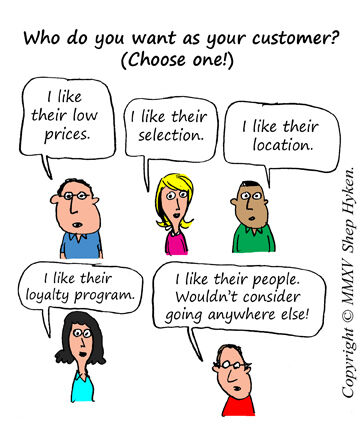
Before the implementation begins, draw up an in-depth analysis of your customers. Not all your customers are created equal. The best customers are the ones who bring the maximum value to your business. They deserve the best value that your company can give. This value needs to be in proportion to the value that the company derives.
You need to understand their:
You can use a wide range of sources to understand them better: analytics, sales conversations, purchase history, direct surveys, and even social media interactions. Analyzing your customers will help you construct a loyalty program that will address their needs and ensure you deliver a valuable customer experience.
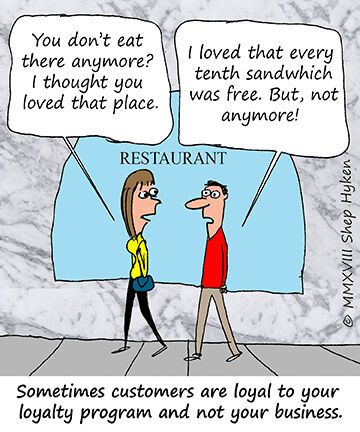
Simply launching a program because your competitor has one is a sure-shot strategy to failure.
The value delivered by your customer loyalty program should exceed the cost of the value delivered by the business. That is the cardinal rule of finding the loyalty model that works for you.
Choosing a solution that fits your business model will help you reach your objectives and make customers want to be a part of it. Loyalty programs come in all shapes and sizes and can be customized to fit your customers’ needs. The most common types of loyalty programs fall into one of the following categories:
Whether your goal is customer retention, increased wallet share, new customer acquisition, or increased purchase frequency, make sure to define a realistic and achievable goal. Determining these metrics will help you make intelligent decisions on how to improve your program based on concrete data.
For example, for every dollar spent with Sprint, a customer earns an airline mile redeemable with any of five different airlines. A member of any of those five airlines’ frequent-flier programs would then choose Sprint as a long-distance carrier. They might stick with Sprint even if they became temporarily dissatisfied with the service because the mileage benefit accrues over time. These is the customer’s “golden handcuffs.”
And the goal here was simple – to stop the customer from defecting.
Above all, a loyalty program has to be scalable and adaptable. The best way to do that is using information obtained through monitoring the results.
Customers will lose interest, ignore, or forget an overly complex loyalty program.
Signup, conditions, point accumulation, and redemption rules should be clear and easy to follow, allowing your audience to enjoy their experience while using your service and being rewarded and recognized for their engagement.
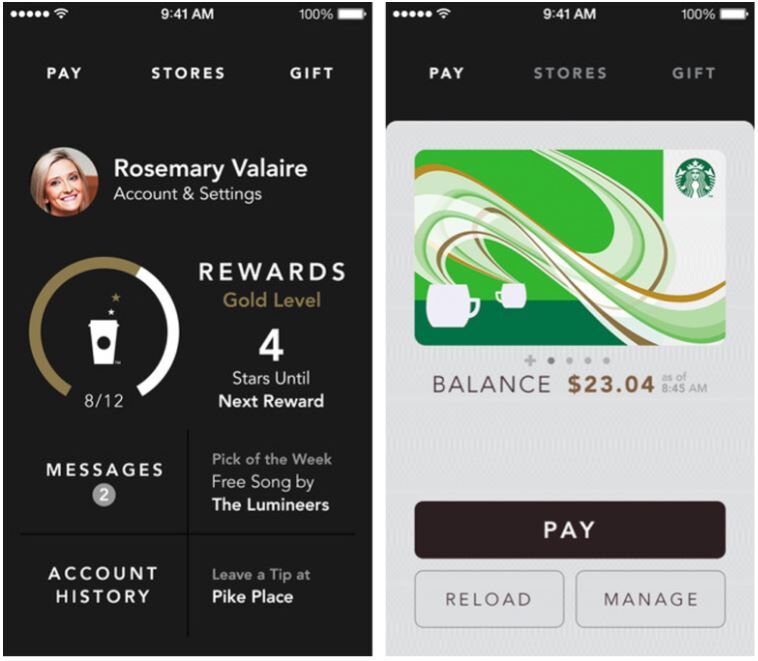
Look at how Starbucks keeps it simple. Their value-based loyalty scheme awards customers two stars for every dollar spent. Customers are able to redeem 125 stars for a free drink and food. In 2019, they removed the condition of lapsing star points (to promote long-term loyalty) and allowed customers to redeem as few as 25 stars.
What do they have to show for it? Recent research revealed that nearly half of all mobile users who regularly use restaurant loyalty apps (48%) use Starbucks Rewards. In 2019, Starbucks increased its user base by 11% and reached more than 16 million active members.
Many companies offer exorbitant rewards for signing up with their programs. Say you get 10,000 points that can be redeemed against airline tickets. But then there’s nothing else in that program to ensure that the customer doesn’t defect. Product-driven marketing such as this routinely creates customers who shop for the lowest price and the most significant value at that price. No business has ever made money off such customers.
Instead, look beyond the obvious.
Consider rewarding beyond the first-time purchase or signups or repeat purchases. For example, you can reward:
In the long run, if you create instances where your audience will enjoy gaining more points through your program, you will develop long-term relationships with your customers — a precious asset in today’s competitive market.
Your rewards have to be valuable and attainable to keep your clients’ interest. The rewards have to be relevant, achievable, incorporate a prestige/aspirational aspect, and be convenient.
So, you should consider offering:
Your decision will be based on what your customer values and what best fits your business model.
Understand that customers don’t want to be a part of 20 different loyalty programs or wait five years to buy an iPhone with the accumulated points. The rewards need to be a balance of short-term gratification and long-term allure.
The best scenario is to have rewards that your customers perceive as valuable but that have a low actual cost for you. What is the reward worth to your customers?
One way to augment the value of your rewards is by partnering across brands. For example – GM partnered with Household Finance, and their co-branded credit card put away 5% of spending toward the purchase or lease of a new car. With this, GM was able to share value with loyal customers and attract new customers as well.
The value that customers assign to your reward types also delineates the type of customers that you should be targeting. The wrong signups inflate the signup rate and bring down the true markers of the success of the customer loyalty program. The right rewards and their perceived value will target and attract the right customer segments.
Choose the channels through which you will communicate with them that best fits their preferences and your business: email, social media, apps, live chat, etc. Keeping a constant line of communication will enable you to tell them about special promotions and offers, and it will make them feel special and looked after. So decide how you will talk to your clients and, through that, learn more about them to understand them better and consistently deliver valuable content.
See this communication from a food delivery business and how they ensure that customers know what they’ve been up to.
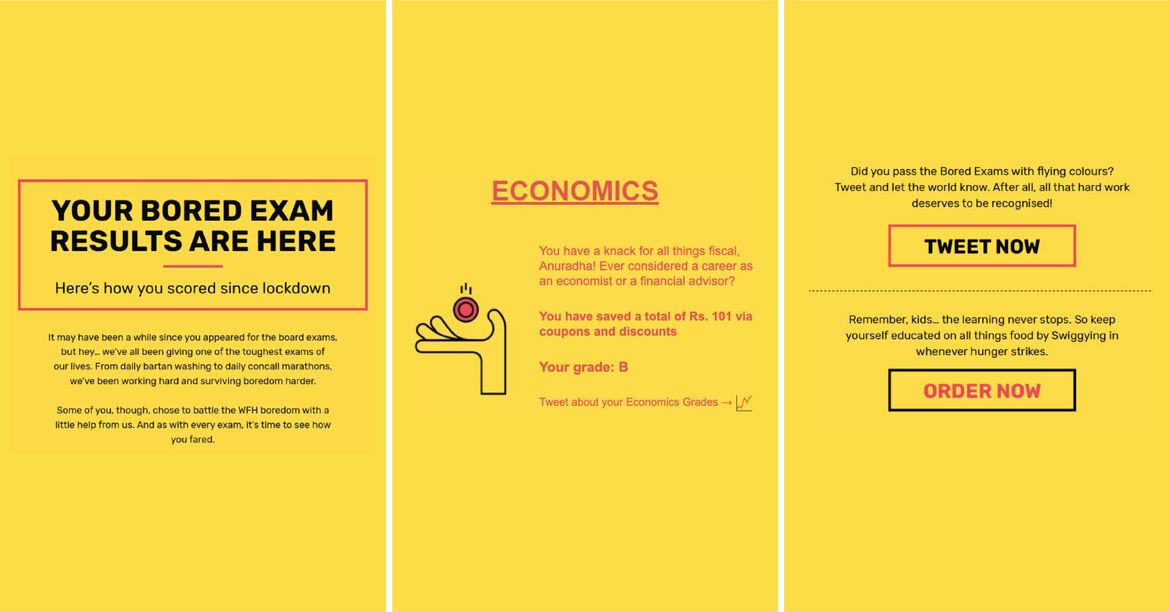
After creating your loyalty program, your audience has to be made aware of its existence. Depending on your program’s nature, make sure to use all the suitable vehicles to promote it: social media, online ads, outdoor and indoor signage, email marketing, etc. Customers have to understand the connection that exists between your brand/company and your new loyalty program. They have to feel that it is connected to the rest of your brand and communication plan to remember you and make you stand out. Here’s how you can promote your well-designed loyalty program:
Bonus: Use similar visual cues and content across all promotions to make your loyalty program memorable.
It’s a given that loyalty programs boost profits and improve customer retention. You get to keep your customers in close range and keep them coming back for more. A successful customer loyalty program needs an unrelenting focus. After all, developing a loyal customer base is no mean feat.
To learn more about customer loyalty programs, contact us.


